01
Ready-built shells
Purpose-built factory and warehouse units, sized for component makers and expandable as you grow.
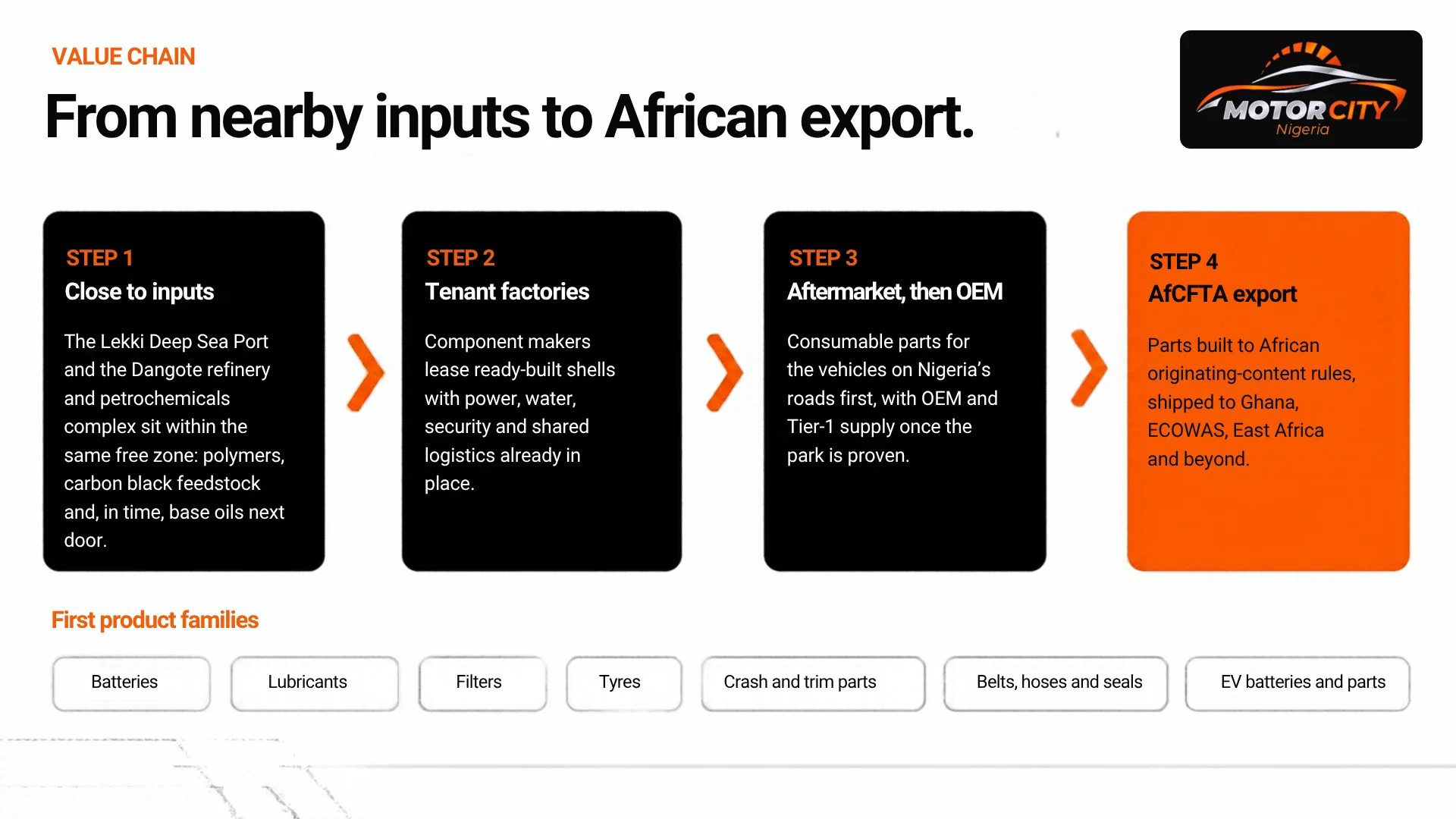
Lease a factory shell with power, water, security and logistics already in place, next to a deep-sea port, a refinery and petrochemicals complex, and the vehicles Nigeria already drives.
Motor City Nigeria works on a landlord model: we build and run the park, and tenants lease space and pay a services levy for the shared infrastructure.
Purpose-built factory and warehouse units, sized for component makers and expandable as you grow.
Shared utilities and site security run by the park, so your team can focus on production.
Common warehousing, loading and logistics services, with the Lekki Deep Sea Port close by.
Tax and duty incentives for qualifying tenants inside the Lekki Free Trade Zone, subject to LFTZ rules.
Programmes in lean manufacturing, Six Sigma and quality systems to help local suppliers reach OEM standard.
A technical academy on the same site, training the technicians, mechanics and engineers your plant needs.
Nigeria’s roads carry more than ten million vehicles, most of them imported used. Every one of them needs consumable parts. That is the first market the park is built to serve, with OEM and Tier-1 supply to follow once the park is proven.
Makers of fast-moving aftermarket parts for the Toyota, Honda and other models that dominate Nigeria’s vehicle base.
Overseas manufacturers looking for a West African base through joint ventures and technology transfer with local partners.
Assembly and Tier-1 tenancies in later phases, supplied by the component base already working on site.
The Lekki Deep Sea Port and the Dangote refinery and petrochemicals complex sit within the same free zone: polymers, carbon black feedstock and, in time, base oils next door.
Tell us what you make, the space you need and your timing.
We map your power, water, floor area and logistics needs against the masterplan.
A non-binding letter of intent reserves your place as the park is financed and built.
Lease terms are agreed as units are completed, followed by fit-out and start of production.
Expressions of interest are welcome now. Tenancies are subject to financing, construction and final agreements, with first operations targeted for 2030.