Nigeria’s first integrated automotive manufacturing and motorsport cluster.
Free Zone factory space for automotive suppliers and OEMs, an international-standard circuit, a skills academy and a digital services zone: one master-planned site, built around the vehicles Nigeria already drives.
The Cluster: four pillars on one site
A cluster works because its parts feed each other: suppliers near customers, drivers near engineers, skills near factories.
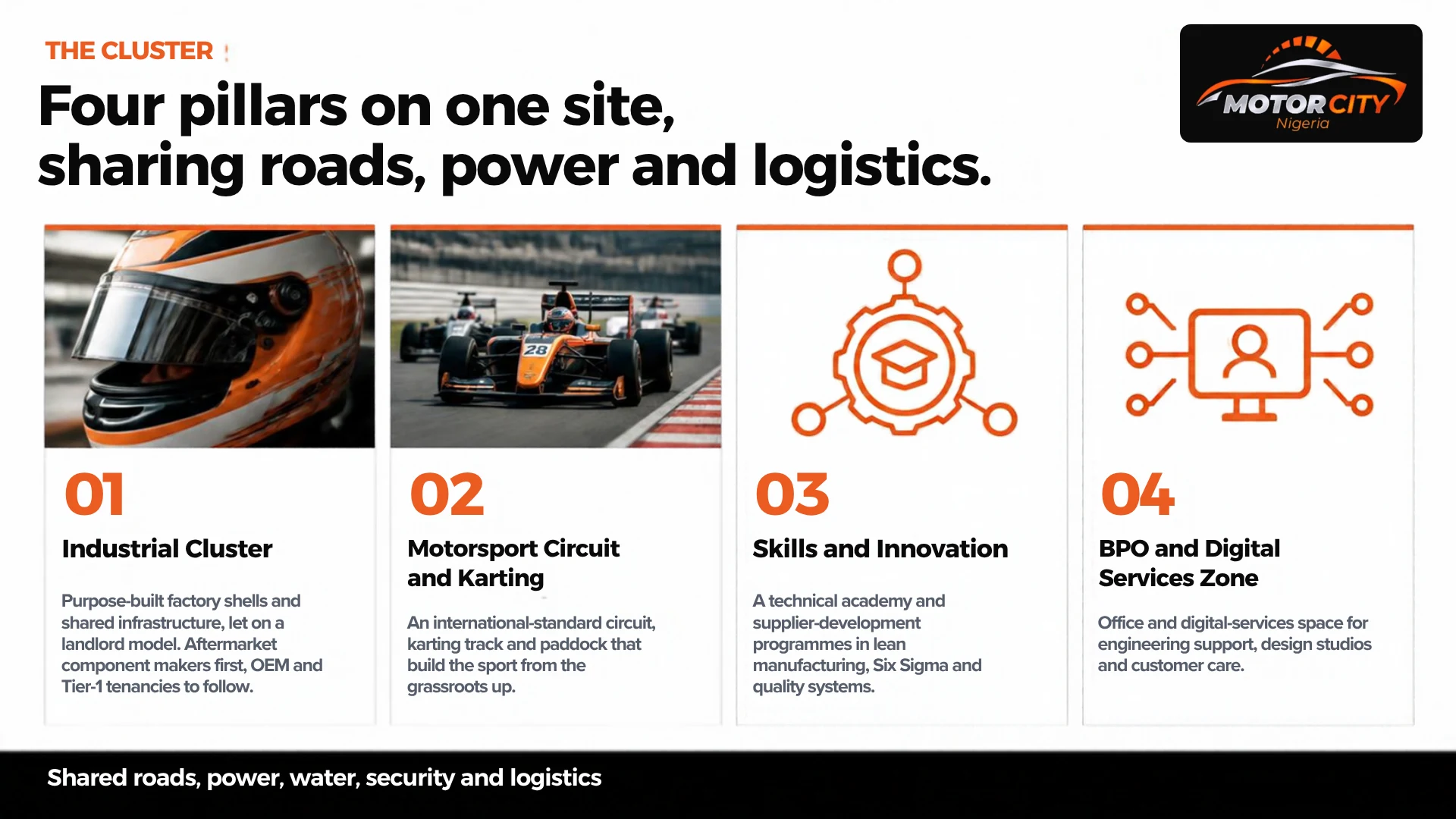
01 Industrial Cluster
Purpose-built factory shells and shared infrastructure, let on a landlord model. Aftermarket component makers first, OEM and Tier-1 tenancies to follow.
02 Motorsport Circuit and Karting
An international-standard circuit, karting track and paddock that build the sport from the grassroots up.
03 Skills and Innovation
A technical academy and supplier-development programmes in lean manufacturing, Six Sigma and quality systems.
04 BPO and Digital Services Zone
Office and digital-services space for engineering support, design studios and customer care.
Masterplan: one site, eight working parts
Industrial, sport and skills uses sit side by side. Tenants share warehousing and logistics, and the circuit doubles as a test bench for the factories next door.
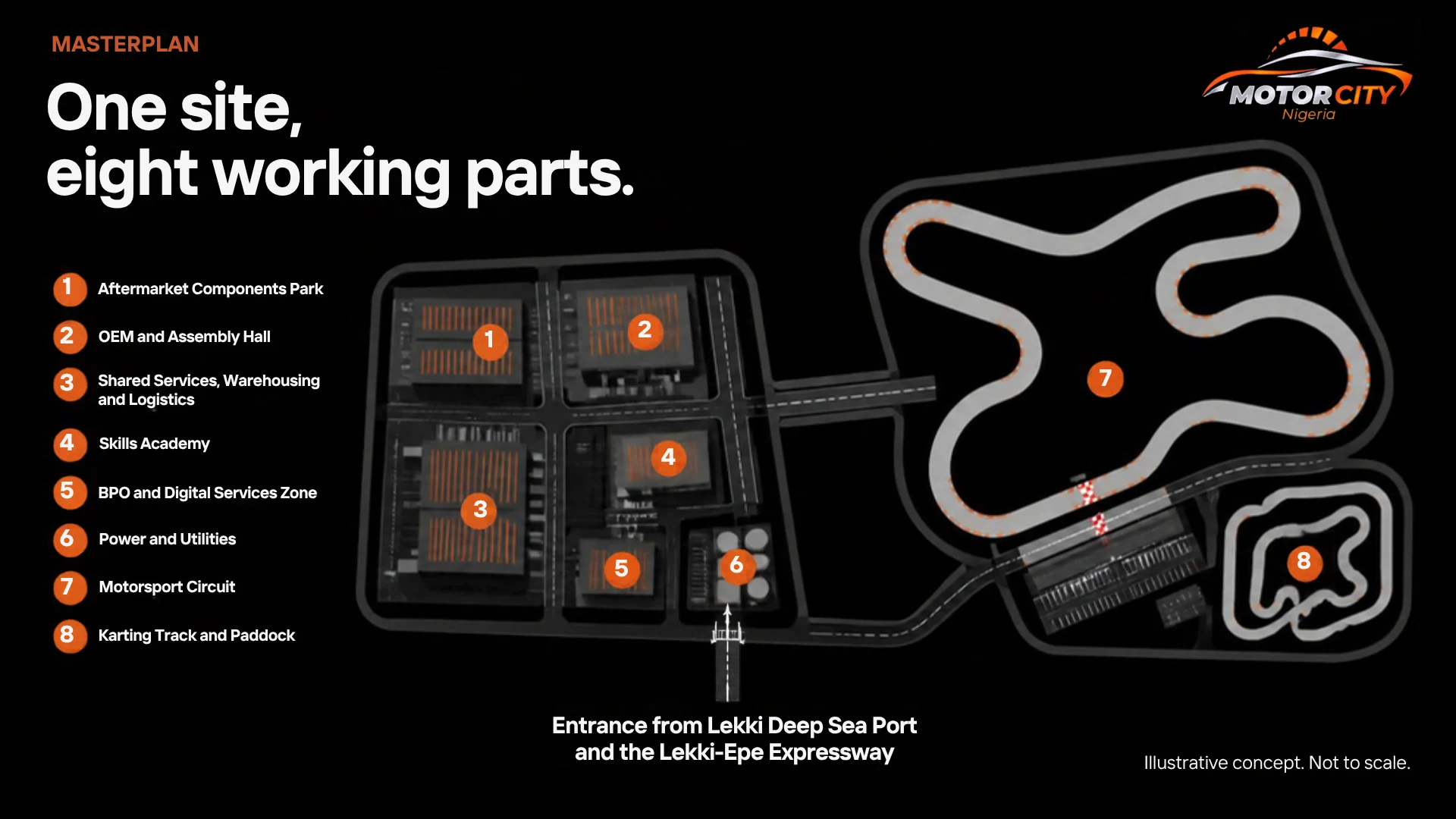
1 Aftermarket Components Park · 2 OEM and Assembly Hall · 3 Shared Services, Warehousing and Logistics · 4 Skills Academy · 5 BPO and Digital Services Zone · 6 Power and Utilities · 7 Motorsport Circuit · 8 Karting Track and Paddock
Value chain: from nearby inputs to African export
Nigeria imports used vehicles, so the first, lowest-risk business is the parts those vehicles consume. It needs less capital than vehicle assembly, earns revenue sooner, and builds the supplier base OEMs look for.
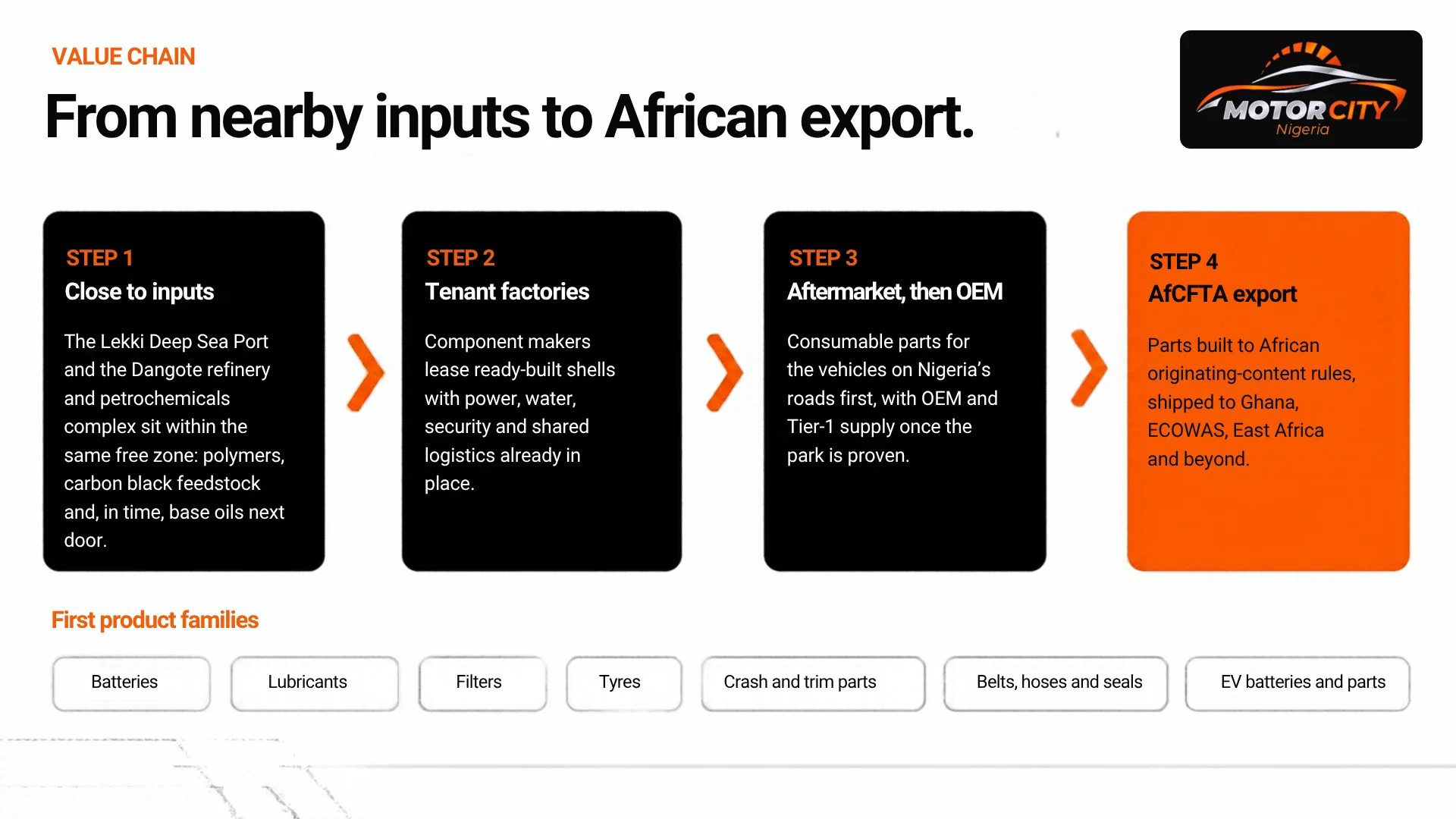
1 Close to inputs
The Lekki Deep Sea Port and the Dangote refinery and petrochemicals complex sit within the same free zone.
2 Tenant factories
Component makers lease ready-built shells with power, water, security and logistics in place.
3 Aftermarket, then OEM
Consumable parts for Nigeria’s vehicles first, with OEM and Tier-1 supply once the park is proven.
4 AfCFTA export
Parts built to African originating-content rules, shipped to Ghana, ECOWAS, East Africa and beyond.
Network: Morocco, Egypt and Nigeria
Morocco and Egypt already anchor Africa’s vehicle assembly and export. Motor City Nigeria is being built to connect to them, bringing West Africa’s largest market.
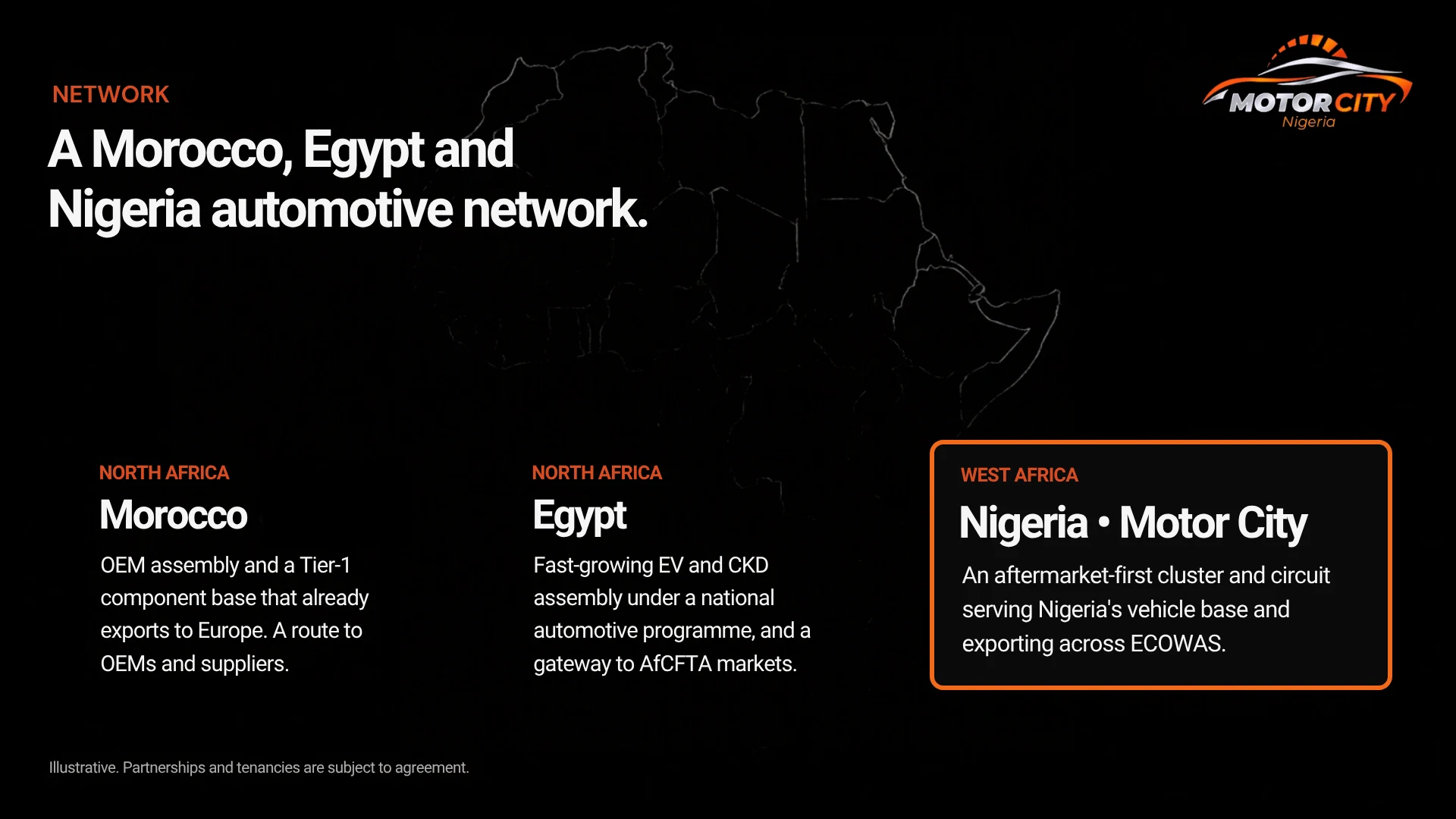
Morocco
OEM assembly and a Tier-1 component base that already exports to Europe.
Egypt
Fast-growing EV and CKD assembly, and a gateway to AfCFTA markets.
Nigeria · Motor City
An aftermarket-first cluster and circuit serving Nigeria’s vehicle base and exporting across ECOWAS.
Roadmap
Phased, so each stage proves the next. Indicative timeline, subject to feasibility, financing and approvals.
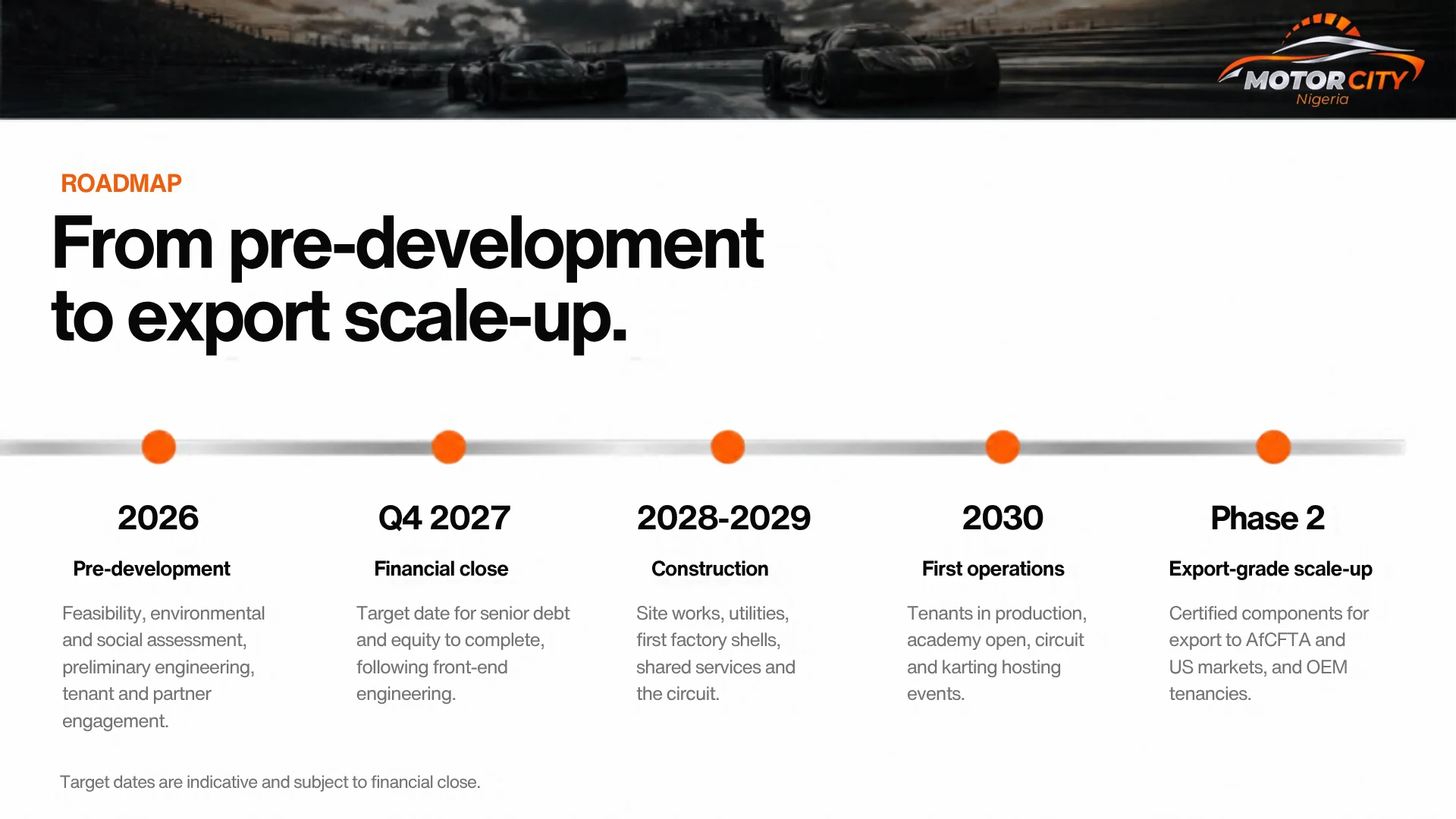
2026 · Pre-development
Feasibility, environmental and social assessment, preliminary engineering, tenant and partner engagement.
Q4 2027 · Financial close
Target date for senior debt and equity to complete.
2028–2029 · Construction
Site works, utilities, first factory shells, shared services and the circuit.
2030 · First operations
Tenants in production, academy open, circuit and karting hosting events.
Phase 2 · Export-grade scale-up
Certified components for AfCFTA and US markets, and OEM tenancies.
Tenants, suppliers, OEMs, partners: talk to us.
Tell us what you make, what you need or how you would like to work with us, and we will respond with the right next step.